Support an association’s regional delegates
Published on
Every day, associations mobilize committed teams to address major social issues, support the people who need it, and change perspectives on topics that are sometimes still taboo.
To carry out these missions, their teams need to be able to rely on solid practices, have shared reference points, and develop their managerial skills. Like any organization, associations benefit from structuring their practices to support the growth of their projects and their teams.
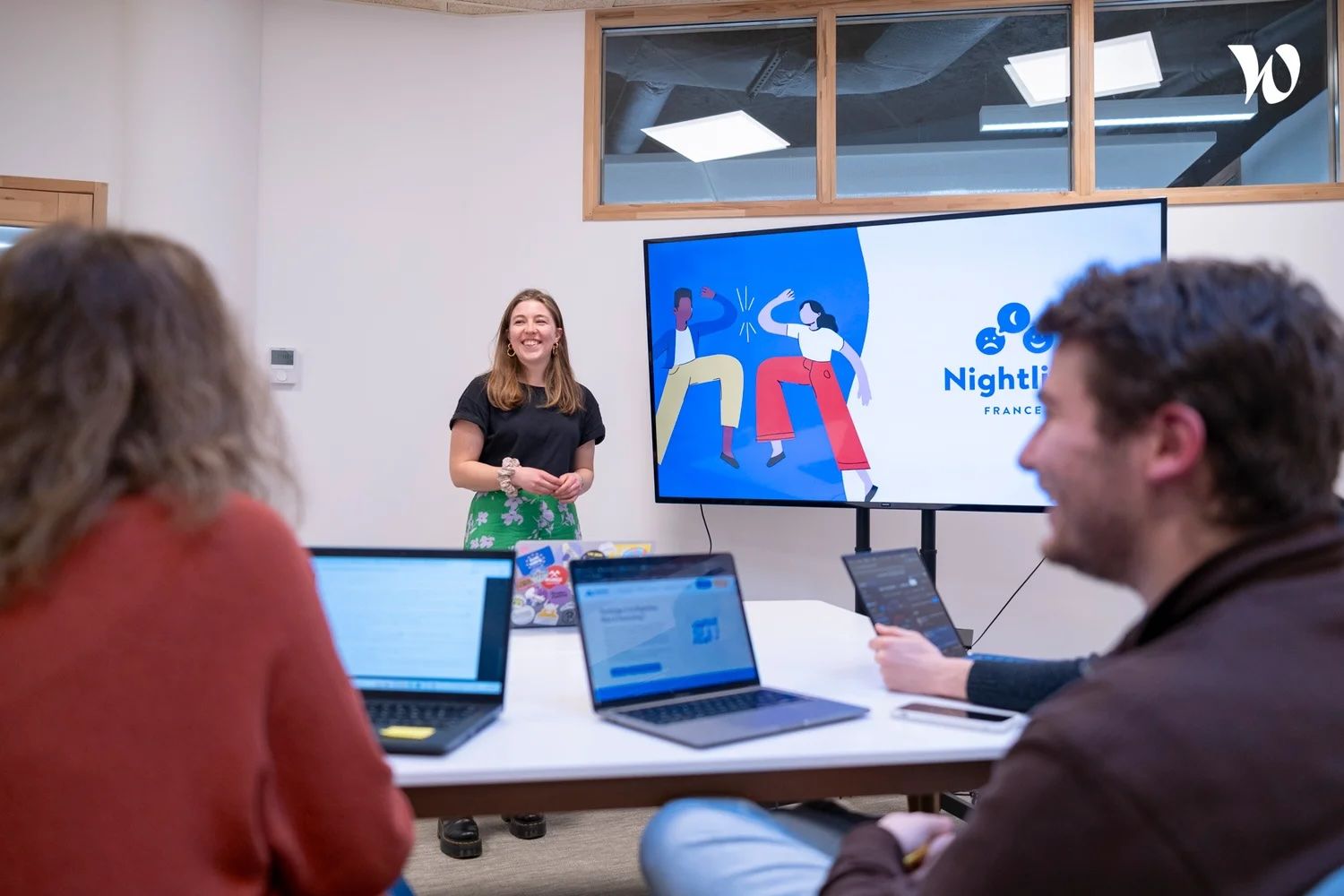
At Seven, we are convinced that organizations committed to the collective interest also deserve support in upskilling their teams. It is with this in mind that we regularly collaborate with players in the nonprofit sector. Among them, Nightline, an association committed to the mental health of young people and students. Its ambition: to improve mental health at both the individual and collective levels by informing, training, and equipping young people, by fostering mutual support and supportive environments, and also by contributing to the dissemination of knowledge and the destigmatization of mental health in society.
Seven had already supported the association in 2023 in training some employees. Two years later, in June 2025, Nightline wanted to continue this collaboration by organizing two days of management training for ten regional delegates, key players in leading and coordinating local branches.
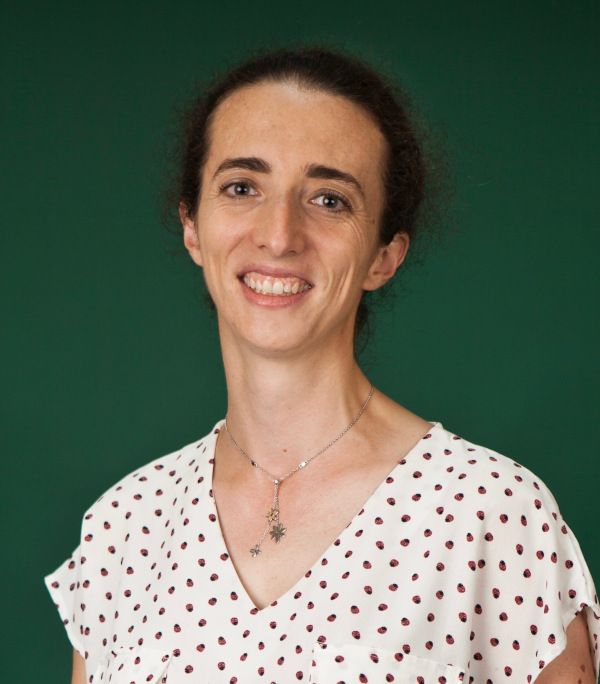
Behind this project: Laëtitia Hadoum, the association’s HR Manager, who oversees the structuring and development of human resources at Nightline. She called on Seven to support the upskilling of these field managers and agreed to share her feedback with us.
Could you introduce yourself, tell us about your role, and about the Nightline association?
Laëtitia Hadoum: I have had the opportunity to work at Nightline since 2024. It is a non-profit organization that works to improve the mental health of young people and students, at both individual and collective levels. We start from the principle that good mental health corresponds to a state of well-being that allows everyone to thrive and fulfill their potential. In this context, acting alongside young adults in formative stages of life is essential. For Nightline, mental health is everyone’s business, just like physical health.
We design support, guidance, and prevention initiatives. Our mission is to offer resources that are accessible and suited to young people, designed by and for them, with support from professionals.
In practical terms, Nightline offers a nighttime listening service (available every evening from 9:00 p.m. to 2:30 a.m.), free, anonymous, and confidential, run by student volunteers trained in active listening and supported by professionals. The reasons for calling are varied: guidance support, stress, sadness, family conflicts, breakups, need for advice, suicidal thoughts, or simply the desire to talk.
We also develop prevention and training initiatives throughout France, notably with the Mental Health Fresk and the Student Sentinels program. We also run communication and destigmatization campaigns around mental health. Finally, we lead research and institutional advocacy projects for better consideration of young people’s mental health in France and internationally.
In a few figures, Nightline is:
27,347 young people reached over the academic year, through more than 513 field initiatives
450 committed volunteers
36 branches in Europe
My role, as HR Manager, is to structure and steer the association’s HR strategy, while supporting the growth of the salaried team. I ensure a structured working framework so the association can carry out its missions with students and young workers as effectively as possible.
Why did you launch training for your regional delegates?
L.H: Since 2025, we have been going through a fairly strong phase of structuring and growth at Nightline, with many recruitments and the opening of new regional branches.
Our regional delegates therefore hold a key position in the organization. On a daily basis, they manage civic service volunteers, coordinate volunteers, and oversee local activities.
It is in this context that, in 2025, we identified a need to better equip them in their roles. The main challenges concerned managerial posture, delegation, handling complex situations, and organizing work within local teams.
Why did you choose Seven?
L.H: Before I arrived, Nightline had already worked with Seven in January 2023. Since the person I replaced had very good memories of that collaboration, I quite naturally wanted to continue this partnership.
So in June 2025, we organized two days of Seven management training for ten regional delegates.
What were your objectives in setting up this training for regional delegates?
L.H: The Seven training aimed to meet five major objectives for regional delegates:
strengthen their managerial posture
clarify their delegation and work organization practices
give them practical tools to handle complex situations
foster a shared managerial culture within the association
create a collective space for exchange between regional delegates so they can share experiences and align their practices
What stood out most to your teams during the sessions?
L.H: Feedback from the regional delegates was very positive.
They particularly appreciated how practical it was and how directly applicable it was in the field. The hands-on exercises proposed during the training enabled them to immediately connect with their day-to-day reality.
Moreover, several tools stood out to them in particular, such as Jurgen Appelo’s Delegation Poker, Paul Hersey and Kenneth Blanchard’s four management styles, as well as Bruce Tuckman’s five stages of group development.
Finally, everyone praised the pace, availability, kindness, and quality of facilitation by the Seven trainer. You can feel that there is real selection work and a high level of standards in the choice of trainers.
What did you particularly appreciate during the support provided by Seven?
L.H: I particularly appreciated the listening capacity of the Seven team. They understood our needs specific to our associative structure, as well as our organizational constraints.
I also greatly appreciated their responsiveness and the possibility of co-constructing the program. We were able to share our point of view on how the training would unfold and connect the direct managers of the regional delegates with the Seven team in order to prepare truly suitable training.
Thanks to these exchanges, Seven was able to build a tailor-made program for our teams. This was not rigid management training without flexibility, but training specifically designed for our association and for the realities of our regional delegates.
How do you plan to continue the work started after the training?
L.H: The training is a first step in moving forward on management-related topics.
Since the Seven training in June 2025, several actions have been put in place. In particular, we launched internal managerial follow-up sessions, encouraged exchanges of best practices, and initiated moments called “territory cafés.” These initiatives allow regional delegates to share feedback and best practices following the training.
At present, we are considering integrating certain tools and practices covered during the Seven training into our internal frameworks.
Would you recommend Seven?
L.H: Yes, absolutely.
I would especially recommend Seven to associations in a structuring phase and facing management-related challenges.
In the nonprofit sector, it can sometimes be difficult to find training organizations capable of understanding the specific needs of associations. Seven knows precisely how to adapt to its clients and has a good understanding of collective dynamics, especially in associative contexts where human issues are particularly strong.
And it is pleasant to interact with a friendly team.
Supporting regional delegates in an association means understanding specific field realities, particular balances, and deeply human challenges.
It is with this in mind that we at Seven offer tailored solutions, designed as closely as possible to the contexts and needs of each organization.
As Laëtitia Hadoum, HR Manager at Nightline, emphasized, it is precisely in this ability to adapt and co-build that the strength of our support lies.
An approach that we put at the service of all companies, whatever their structure, sector, or level of maturity.