>
>
>
In the shoes of a Chief of Staff (CoS): role, responsibilities, skills?
In the shoes of a Chief of Staff (CoS): role, responsibilities, skills?
Published on
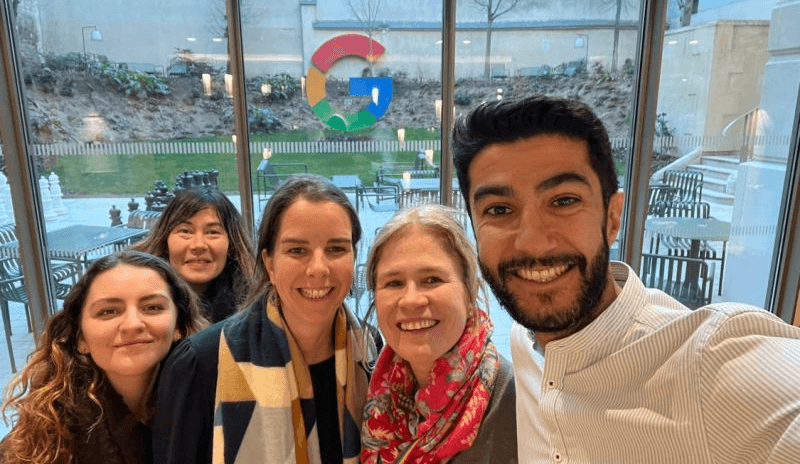
“It was great to refine my vision of the Chief of Staff (CoS) role, to seek out key insights and best practices through discussions with other CoS so that I could become more effective, promote and enhance my role internally, and leave with real eye-opening takeaways.” - Sabine Caekaert, Strategic Steering Project Manager at Bordeaux Métropole, and participant in BeCoS cohort 7.
“This training program allowed me to compare myself with other ways of working, to exchange with peers working in sectors different from mine, but at the same time with issues very close to my own.” - Aude Parfaite, Project Manager at Geneva University Hospitals, and participant in BeCoS cohort 7.
We would like to thank Sabine and Aude, our two BeCoS 7 participants, our training program dedicated to anyone wishing to train for the Chief of Staff (CoS) role and accelerate their onboarding.
A true facilitator in a CEO’s day-to-day life, the CoS optimizes their leader’s “brain time” by taking charge of several areas of responsibility. This role, still underrepresented in France, highlights the real need for Chiefs of Staff to connect with their peers in order to compare their day-to-day realities, share best practices, and adopt new approaches to support their leaders even better. In 2022, there were 800 in France compared with 4,700 in the United States according to a study conducted by the Roland Berger institute. In this context, we developed BeCoS, a Seven program aimed at both younger and more experienced CoS professionals. Created in February 2022 by Grégoire Kopp, Founder of GRK and former CoS at OVH Cloud, and Yahya Fallah, Co-founder of Seven, BeCoS seeks to spotlight this profession, so essential for leaders who gain considerable efficiency, reach, and influence from it. We invite you to explore the Chief of Staff function: what their role is within a company, their typical missions (although they vary from one individual to another), the prerequisite qualities, and how they can optimize their daily work even further with our BeCoS program.
———
Being a CoS: wearing many hats!
The Chief of Staff role has its roots in military and political fields. Dating back to the 19th century, it became particularly important during World War II as Chief of Staff of the Commander in Chief. The role later expanded to the White House, where the Chief of Staff manages the President of the United States’ schedule and advises on domestic policy. Gradually, this function evolved to integrate into the private sector, meeting companies’ strategic and operational needs. Today, the CoS is a central player in many organizations, acting as a crucial intermediary between leadership and various stakeholders. Defining this role and its missions precisely is not easy, because this multifaceted profession varies from one CoS to another. Indeed, each CoS stands out through unique responsibilities that depend on the nature of the company, the executive they support, and their own skills and experience. In some companies, the CoS may focus on managing strategic projects, while in others, they may play a role more centered on internal and external communication. However, certain key “hats” emerge, reflecting the fundamental aspects of this diverse role.
Right-hand person
First, we can pause on a CoS’s primary mission: providing daily support to the CEO and, where relevant, to other executives such as the COO, CTO, CMO, or CFO. They relieve the executive of certain tasks, thus reducing mental load, represent leadership both internally and externally, facilitate interactions with the various stakeholders encountered, ensure the launch and steering of strategic initiatives, coordinate projects, monitor them, and contribute to strategic decisions. In this way, the CoS supports the CEO across all daily missions and ultimately has an in-depth understanding of the company, almost on par with its leader.
Assistant+++
Some CoS professionals, in addition to managing their leader’s schedule, hold responsibilities that go beyond simple meeting planning. By sharing their perspective and providing strategic advice, they become a valuable resource for leadership and are able to advise on highly strategic subjects. Isaure de Zélicourt, CoS at Pigment, emphasized optimizing the CEO’s meeting organization as a valuable task. Recognizing the value of their leader’s time, the CoS ensures that every moment is devoted to a carefully chosen task or meeting, and that any use of this time requires their specific expertise and indispensable presence. They help the leader stay focused on what matters most.
10x CEO
Maximizing a leader’s impact is one of the main benefits of hiring a Chief Off Staff (CoS). Their presence makes it possible to extend leadership influence across more departments, closely monitor major company projects, and spread the company vision more effectively, both internally and externally. With a collaborator acting as a right-hand person, a leader has the opportunity to multiply their impact tenfold. During the BeCoS program, participants worked on a practical case: “How could the CoS help their CEO become a 10x CEO through AI?”, prompting reflection on the CoS’s multiplier role. This importance confirms a point highlighted by the Roland-Berger / Institut Choisel study: two-thirds of CAC40 leaders had a CoS by their side in 2022.
Ambassador
In the leader’s absence, the Chief of Staff takes on the role of representative. They are responsible for communicating the company’s values and vision to teams, thereby conveying key leadership messages internally. To accomplish this mission, it is essential that they are fully aligned with the company’s DNA, but also with their leader’s own vision. Furthermore, they play a crucial role in relaying information from operational teams to leadership members, selecting and communicating only the most strategic and relevant information to the leader.
Information gatherer and analyst
Because the CoS gathers relevant information from various teams and departments, as well as from external sources, they are able to conduct a critical analysis of the company’s operations and choices. They can identify trends, opportunities, and challenges the company may face, help leadership with decision-making, participate in setting long-term goals, think through actions that support company growth, and rethink current processes.
Swiss army knife
Loreline Descormiers-Thollot, CoS at Wallix, whom we interviewed, highlighted the versatility inherent in the CoS role. In her daily work at Wallix, she engages in a wide variety of missions: from internal communication by spreading the CEO’s vision within the company, to organizational management by carefully planning the CEO’s meetings, to drafting key messages by preparing written communications, speeches, and other talking points, to corporate deployment by ensuring alignment between the company’s perceived image and desired image, to involvement in public affairs by representing the CEO in lobbying meetings. The CoS is a multitasking actor, involved as much in solution-finding as in action and communication. They move between operational and strategic aspects, representing leadership both internally and externally. Sometimes in the shadows, sometimes in the spotlight, they are involved in cross-functional, operational, and strategic subjects; which makes them a true Swiss army knife. Thanks to their broad perspective, the CoS becomes a trusted advisor to leadership and other executive team members.
Essential soft skills for a CoS
There is no single path to becoming a CoS. Candidates often come from diverse backgrounds, having built significant experience in project management, consulting, or leadership roles within organizations. A deep understanding of company operations and a relationship of trust with leadership are essential. But being a Chief of Staff above all means having a set of soft skills. Human and interpersonal qualities are essential to succeed in this role, which requires strong relational finesse and a deep understanding of organizational dynamics.
Active listening
A skilled CoS naturally demonstrates listening and empathy. They seek to understand and best respond to the needs and challenges of the various stakeholders they interact with, including their leader, company teams, clients, partners, and media. Day to day, they gather valuable information from all these stakeholders, try to detect underlying trends, identify concerns, spot potential obstacles, and anticipate future needs and issues. The goal is not only for them to be informed about everyone’s perceptions and feelings, but to use what they know to act appropriately, always to make their leader’s daily life easier. To practice active listening, they initiate and organize dedicated exchange sessions with each party. During these discussions, they first let people express their feelings freely, then invite them to justify their views and explain the reasons behind their emotions, and finally build on what they say based on their lived experiences.
Adaptability and managing the unexpected
Unexpected events and last-minute changes are familiar territory for a CoS: a deadline moved up by a month, a meeting added “last minute,” a team manager dismissed... Of course, they cannot foresee everything, but they can rely on existing bottlenecks to anticipate future friction and already think through what they could undertake. When these unexpected events occur, they support their leader in choosing solutions and ensure all decisions made are aligned with the company’s political stakes, its raison d’être, but also with how teams operate and what they have shared.
Strategic prioritization
By the nature of the role, a CoS receives a multitude of data and seeks to collect even more. Unable to process everything immediately, they must prioritize collected information, sort it, and filter it. For each request or task, they evaluate urgency and importance, examine it with discernment, determine which can be handled without using the leader’s time, which require their mandatory involvement, which can be delegated to another team member, which can be reviewed later, and which can be removed. Indirectly, they use the Eisenhower matrix, a prioritization aid that classifies missions along two axes (urgency and importance) to focus on what matters most.
Writing excellence
They may be responsible for drafting their leader’s communication messages, which requires a deep understanding of the company’s vision and careful attention to word choice. Loreline, CoS at Wallix, shared with us the importance of writing well, notably because a large part of her missions involves drafting her leader’s speeches, both those delivered internally to teams and externally. Given that every sentence spoken by leadership can be scrutinized, repeated, interpreted, taken out of context, and potentially used against them, it is crucial for the CoS to weigh every word. They must ensure the message is free of ambiguity or misunderstanding, consistent with previous statements, aligned with the company’s DNA, and considerate of the needs and expectations of the entire audience.
Diplomacy and relational finesse
Another quality of a CoS is their ability to effectively manage a complex network of relationships inside and outside the organization. Indeed, due to the stakeholders they deal with (who often have diverging interests), they may observe conflicts within teams, face projects moving slowly, have to manage poor relationships, re-engage people who are losing commitment, etc. To unblock these difficult situations—for the individual, the collective, and the company—the CoS seeks to strengthen ties between people by positioning themselves as an intermediary when needed, communicating with them at specific moments, carefully selecting the information disclosed to each party, and using communication techniques that help move people from a highly emotional state to a rational one.
With this in mind, the BeCoS program offered by Seven enables current, future, and younger CoS professionals—as well as more experienced ones wishing to accelerate their careers—to confront real cases encountered by CoS, challenge themselves, and mobilize the soft skills we shared above.
The BeCoS program: keys to making daily mission management easier
A very hands-on training
Concretely, the BeCoS program runs over two consecutive weeks. Each day, participants go to a different company, exchange with the host company’s CoS, (re)discover communication, management, leadership, and team management methods to gain efficiency, project themselves into very specific issues, try to solve them, and build a strong network of CoS peers they can rely on long term. For the host CoS, BeCoS allows them to share their passion for this still-new profession, discuss past and current challenges, and pass on best practices acquired over time and experience. Thanks to this field-based exposure, participants benefit from highly practical training, as highlighted by Sabine Caekaert, Strategic Steering Project Manager at Bordeaux Métropole, and BeCoS 7 participant, who told us she enjoyed immersing herself in varied situations: “Each day, we discovered specific issues faced by the host CoS.”
Stepping back from one’s role
BeCoS participants naturally experience a “professional pause” during the BeCoS training. Even though they continue handling urgent matters, their involvement within their company is more limited than usual since they are in training for 2 consecutive weeks, all day long. This break gives them a major advantage: the ability to step back from their role. Going to a different company each day and projecting themselves into someone else’s daily reality leads them to set aside their current challenges during the training in order to solve issues that are sometimes close to, or very far from, what they have already experienced.
Aude Parfaite, Project Manager at Hôpitaux Généraux de Genève in Geneva and BeCoS 7 participant, explained that she reviewed her posture as well as her way of thinking since BeCoS: “These 10 days allowed me to step back from what I was doing. While I used to always respond very quickly to the messages I received, during the BeCoS program I was led to increase my response time, select priority messages that required a quick reply from me, and provide a more rational response. In hindsight, I tell myself that I should draw inspiration from this practice developed during BeCoS, even when I’m not in training.” This broader perspective also comes from the Seven tools shared throughout the BeCoS program. Indeed, over the 10 days, Seven trainers rely on theories tested and validated by experts. These serve as a foundation for participants to solve the issues assigned to them and draw parallels with their own challenges. “All the tools stood out to me at different levels because they allowed me to take a fresh look at what I was already doing or not doing. But if I had to mention a handful of tools, I would mention Simon Sinek’s Golden Circle; because even though I already knew the value of finding your ‘Why,’ I had never truly done the exercise on myself. In addition, Jurgen Appelo’s Moving Motivators deeply impacted me. Very quickly, I saw how to use it with certain people in my leadership team. Finally, everything related to emotion management impacted me and prompted me to rethink what I had experienced or was currently experiencing, and therefore to determine new actions to launch when I returned from BeCoS.” - Aude.
Strengthening one’s CoS network
With BeCoS, professionals from various sectors are brought together. They are not alone—this is what they all report back to us. Testimonials from Sabine Caekaert and Aude Parfaite, participants in BeCoS cohort 7, highlighted the importance of these interactions, as well as the expansion of their professional perspectives and the creation of lasting peer connections. Thanks to BeCoS, CoS professionals benefit from a unique framework to share experiences, inspire one another, and build a solid network they can rely on for professional development. This network dimension is essential, especially in a profession that is still emerging in France, where opportunities to connect with counterparts are limited.
The transformative impact of BeCoS on Chiefs of Staff
Following BeCoS, participants are more inclined to undertake new actions they previously did little or not at all.
Leading innovative actions
After BeCoS, participants generally view the issues they have encountered—or are currently encountering—through a different lens. They rethink actions they could have taken and those they can now implement. The challenges faced by host CoS professionals and the practical cases they worked on serve as inspiration for their daily work, even when the topics are very different from their own. Having been immersed in diverse environments and having taken a “break,” they can adopt actions they would not initially have undertaken, and apply methods they had previously associated with a specific sector. Their openness is stronger. They deconstruct their thinking patterns and return to their companies daring more!
Reassessing priorities and focusing on essentials
Participants gain a clearer vision of their professional goals, learning to distinguish crucial tasks from superfluous distractions. They return to their company with a strong desire to focus on essentials, stop wasting time, and concentrate on what matters. This is what Aude shared with us: “Back in my company, I know I will get straight to the point, be more efficient, and focus more on what brings added value.”
Managing communication more thoughtfully
Improving communication is another key skill heavily developed during BeCoS training. Indeed, participants learn effective communication strategies such as active listening, nonverbal communication, and conflict management. They discover how to adapt their communication style to different interlocutors, which is crucial in a role as cross-functional as CoS. They also develop skills to communicate concisely and clearly, which is essential for conveying strategic messages. Sabine, a BeCoS 7 participant, shares her experience: “I can now take a more attentive look at my interactions with others, and put words to what I had been feeling until now.” This ability to reflect on and improve communication greatly contributes to a CoS’s effectiveness and impact within their organization.
———
The Chief of Staff role requires a subtle balance between technical skills and interpersonal qualities. Each CoS brings their own perspective and expertise, but they all share one common point: the ability to adapt and constantly evolve. The BeCoS program, created by Seven, has proven particularly useful in the career development of our Chief of Staff participants, offering them not only practical methods to apply in their daily work, but also challenges they can connect to their day-to-day reality, constructive exchanges, and a strong professional network. Through BeCoS, they gain confidence, prepare for tomorrow’s challenges, develop a fresh vision, and continue to play an essential role in the success of their respective organizations.