>
>
>
Training its new managers: Artur'in's approach, the online marketing solution for local businesses
Training its new managers: Artur'in's approach, the online marketing solution for local businesses
Published on
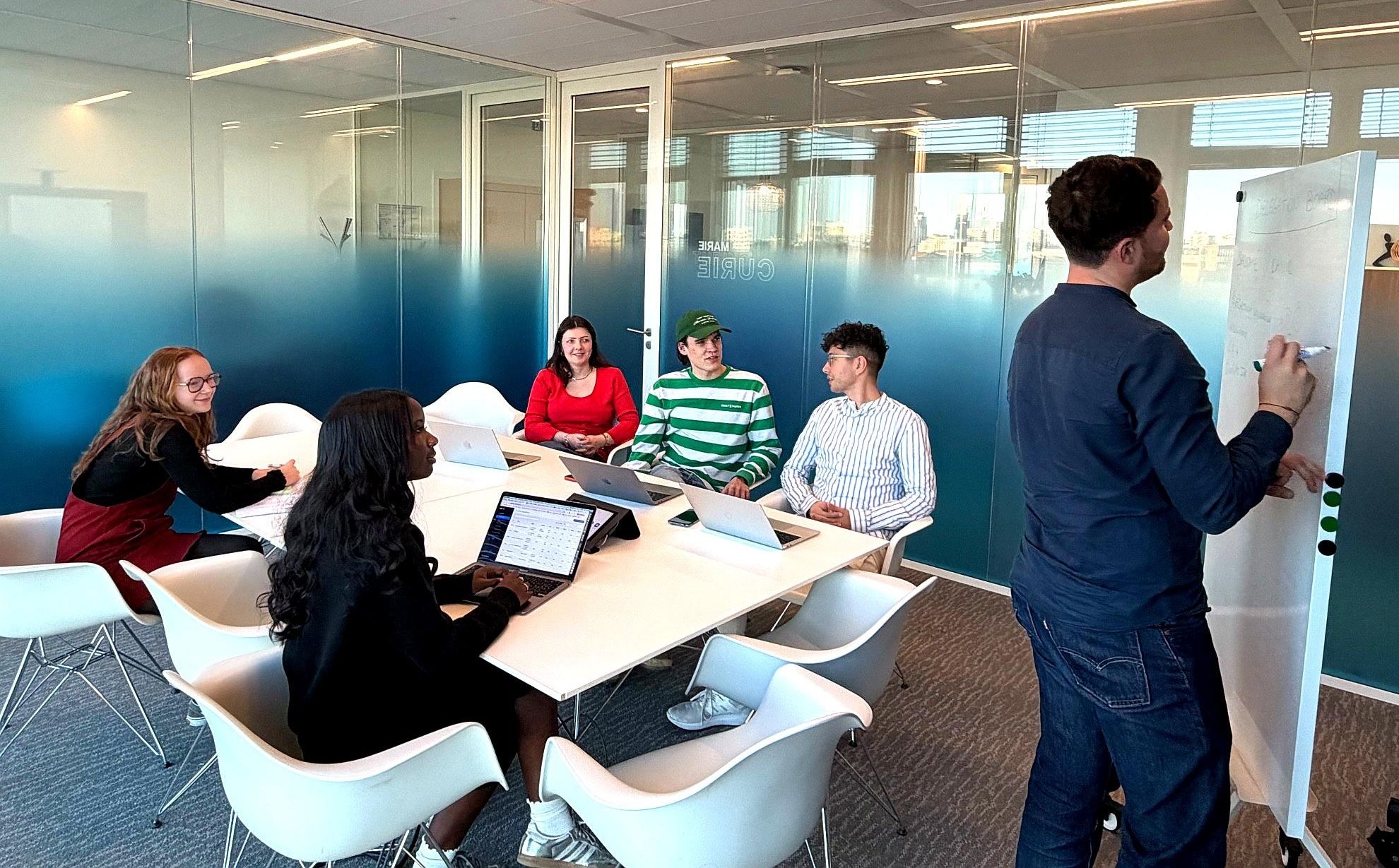
When an employee becomes a manager for the first time, there are many questions: how do you find your stance? How do you give feedback? How do you support and help your team grow?
In these moments, being able to step back and exchange with other managers facing the same situations can make all the difference. Training becomes a framework to come together, share experiences, learn from others, and structure one’s practices.
That is the choice made by Artur’in, an online marketing solution that supports local businesses in managing their digital communication. The company works in particular with four business sectors: real estate, dental surgeons, banking and insurance, as well as regulated professions.
Already a partner of Seven during an initial training course in 2023, Julie Gryson, Senior People Partner at Artur’in, did not hesitate to contact the team again two years later to support a new group of recently promoted managers. The objective: to give them reference points, practical tools, and create a space for exchange between managers from different teams.
Delighted by the experience, Julie agreed to look back with us on the implementation of the “Management Toolbox” training launched in December 2025 and to share with us the lessons her teams learned from it.
Could you introduce yourself?
Julie Gryson: I have been a Senior People Partner at Artur’in for eight years. My main mission is to support our 80 employees on all HR topics, with a particular focus on developing their skills, especially through training.
Why did you launch management training?
J.G: We regularly organize internal workshops and training sessions to encourage learning.
I find that these moments are an opportunity to create a friendly setting, where teams can step away from day-to-day operations, reflect on other topics, and build different kinds of connections from those they maintain on a daily basis.
In September 2025, we noticed that several employees who had recently been promoted to managerial roles needed support in their new responsibilities. Especially since, for most of them, this was their first management experience.
Management training therefore seemed to us to be a good lever to help them step back, structure their leadership posture, and feel more comfortable in their new manager role.
Who were the participants in the Seven training?
J.G: Eight Artur’in employees took part in Seven’s “Management Toolbox” training between December 2025 and April 2026. They were all young managers supervising between two and four people. Some manage permanent employees, while others manage work-study trainees. So there were both very junior profiles and others who were more experienced.
These managers came from different teams: Customer Success, Content, Marketing, and Finance. A difference that turned into a strength. Bringing together people from different professions is very enriching, because each person comes with their own managerial issues and realities.
I am convinced that this diversity of profiles enriched the discussions during the training and allowed participants to share, very concretely, their daily habits and difficulties.

Why did you choose Seven?
J.G: The real question would rather be: “What led me to choose Seven again?”
I already knew Seven, because we had worked with the team in 2023. Their approach had particularly impressed me. With Seven, I immediately felt that we shared the same vision of training and management: beyond training someone in management, we are interested in the person behind the manager.
I had also taken part in that first training as a participant, and I remember loving the experience. So I was already an ambassador!
Since that first collaboration had gone very well, it seemed natural to contact Thomas Fraudet, co-founder of Seven, again in September 2025 to explain that we had a new group of young managers to support. The challenges were not exactly the same as in 2023, and Seven understood that very well.
The Seven team quickly took our specific context and constraints into account to adapt the training program. Seven offered us a new trainer, just as relevant as the trainer we had before. In the end, it was a real success, just like our first collaboration.
What were your objectives ahead of the training?
J.G: In my view, training should always meet two major objectives.
The first, quite obvious one, is acquiring new skills or strengthening existing skills among employees.
The second is creating a collective that participants can turn to when they face a complex situation and feel the need to discuss it or step back.
As part of this management training initiative, I must say that both objectives were fully achieved. It was truly valuable to bring together, in the same room, people who were not necessarily used to working together, give them a shared foundation of knowledge, and create a space of trust and mutual support that could last beyond the training.
What feedback did you receive from your teams?
J.G: What really stood out to my teams was Seven’s very practical approach, based on tools that can be transferred to their professional lives.
Indeed, Seven training sessions always start from a very specific tool. For example, the DESC method for structuring feedback, or situational leadership developed by Hersey and Blanchard, to adapt one’s managerial posture according to situations.
I also know that participants were able to take ownership of the shared tools and apply them directly to their context. A way to refine their managerial posture, develop their critical thinking, and become more accountable in their practice.
Finally, they told me they loved their trainer. Because beyond theory and methodologies, the trainer provided a lot of context, shared concrete experiences, and offered role-plays very close to the situations they encounter every day.

When you were a participant, were there any tools that particularly stood out to you?
J.G: Delegation Poker, in particular. I’m a big fan of this tool and still use it today with my manager. It opened up many perspectives for us on our HR policy and strategy. I find that it provides a very clear framework and is an excellent long-term monitoring tool. It works just as well with a junior employee as with a more senior employee.
I also use the DESC method a lot, which is very useful for structuring feedback.
And Edward de Bono’s six thinking hats theory, to step back from my behavior and improve how I communicate with others.
What changes did you implement following the sessions?
J.G: The trained managers continued to use the tools covered during the training and started implementing new rituals. For example, some introduced regular one-to-one meetings with their team members. Others reworked the structure of their meetings to make them clearer and better organized.
Would you recommend Seven?
J.G: Absolutely.
If I signed up for a second training with Seven, it wasn’t by chance. The programs are very well designed, communication with the Seven team is extremely smooth, and the trainers know how to find the right balance between theory and practice.
In the end, employees learn a lot and come out of it stronger, which is the main thing.
By renewing her trust in Seven, Julie Gryson, Senior People Partner at Artur’in, chose to support her new managers through a key stage of their journey.
Beyond the tools and best practices shared, the Seven workshops created a real space for exchange for Artur’in’s eight young managers. Coming from different teams, they were able to share their experiences, compare their day-to-day realities, and realize that, despite varied contexts, their challenges were often quite similar. This pooling of perspectives encouraged peer learning and strengthened the feeling of not being alone when facing managerial issues.
Today, this momentum continues: the trained managers keep meeting, relying on the tools they acquired, and evolving their managerial practices on a daily basis.
A way for Artur’in to sustainably embed managerial development in its culture.
If you are facing similar challenges, Seven’s teams can support you in training and developing your managers.