>
>
>
Notarial Practice: Looking Back at a Seven Training Program
Notarial Practice: Looking Back at a Seven Training Program
Published on

Wanting to improve in client support is a continuous improvement approach that we will always encourage. With new procedures being created, practices changing, and the expectations of the public evolving, it is always relevant to strengthen one’s client knowledge in order to offer tailored goods and services. Whether in 2019 or 2022, we observed among the employees of LEXFAIR NOTAIRES the same desire to improve. This Parisian notarial office, which is moreover one of the oldest, listens, guides, and advises everyone in their projects (from drafting routine deeds to structuring complex transactions), whatever the nature of their assets and their sector of activity (office real estate, commercial real estate, real estate financing and banking law, healthcare, renewable energy, hospitality, logistics, vineyards). Attentive to the specific characteristics of their clients and eager to find a training partner capable of deepening tools and connecting concepts with reality, they naturally launched the “Notarial Posture” training with Seven in 2019 and 2022. One of the team members shared with us the impact of these training sessions in her daily work and everything she was able to apply immediately. We are sharing that feedback with you here.
———
A necessary step back to observe learning outcomes
At the end of 2022, we had the opportunity to speak with a team member of LEXFAIR NOTAIRES, whom we will call, for this article, Laure. She told us that the Seven training was particularly beneficial for her. “All the tools seemed very concrete to me. I was able to understand their value, connect managerial concepts with my day-to-day work, and also cross-reference the tools from one session to another, which allowed me to have an overall vision,” she said. Applying what is taught in training requires effort from the participant, who must gain perspective on their habits and past and current experiences, while also accepting to evolve processes. It may take time for what a participant has just learned to mature in their mind. Everyone has their own learning pace, and it must be respected. It is because Laure had reached, in 2022, a level of maturity on the topics covered in training and was able to step back from her daily routine that the Seven sessions brought her considerable value.
Seven training focused on “client support”
When your daily missions involve advising, include a strong relational component, and require high-quality listening—in other words, when your main activity is supporting your clients—there are tools we consider essential to share in Seven training sessions. Among them are: Edward de Bono’s hats theory, the laws of time, the Eisenhower matrix, situational management, Delegation Poker, the socio-dynamic matrix, the method for moving an interlocutor from a strong emotional state to a rational state, Moving Motivators, Elias Porter’s attitudes, anchoring in negotiation, and the laws of influence. Mainly used in Seven training under the “management” component, we use these tools from a more specific angle when participants need to strengthen and personalize their client support, as was the request from LEXFAIR NOTAIRES.
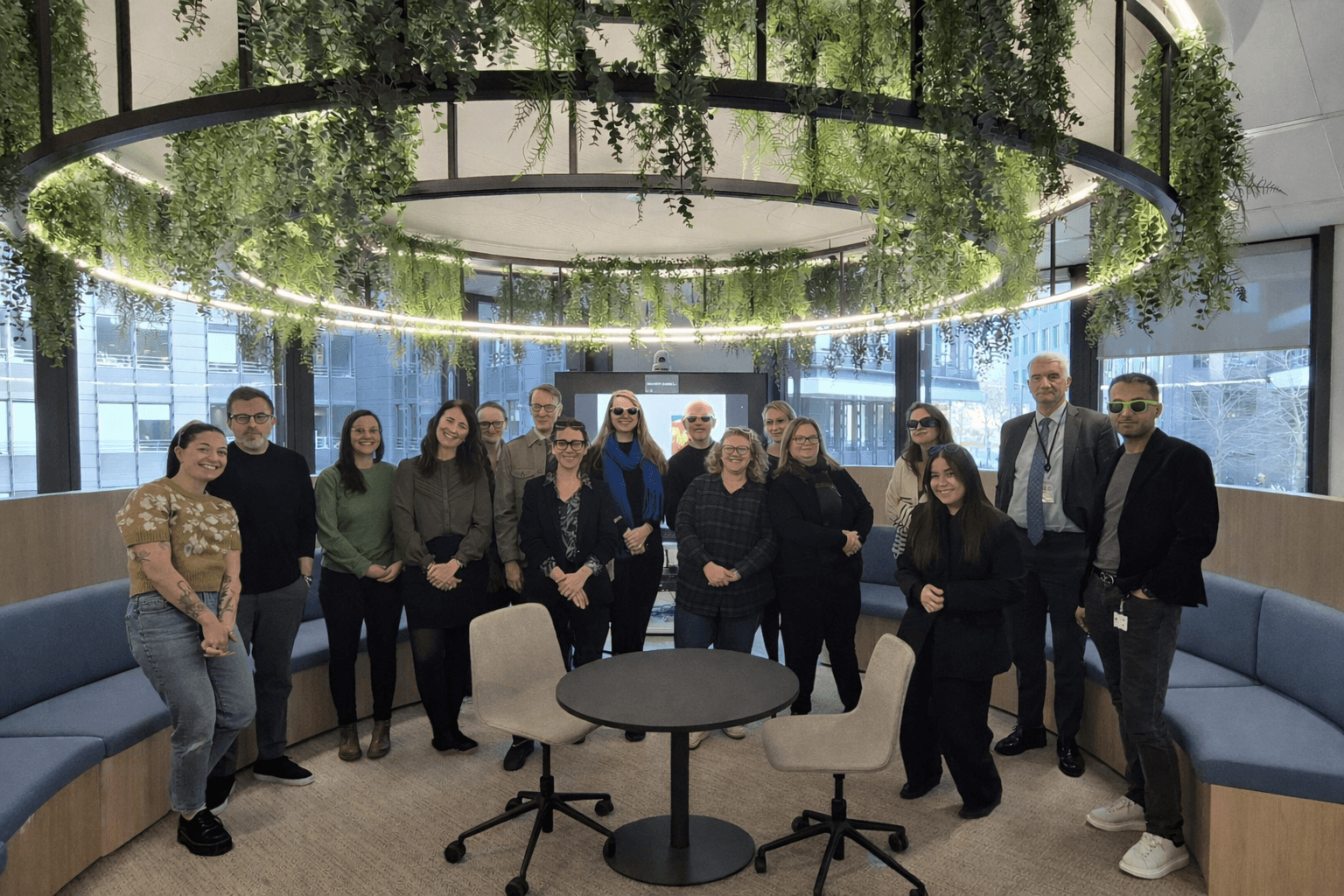
At Seven, there is one theory we like to start with: Bono’s hats. It explains that there are six main ways of perceiving the world. To make these six views easier to remember, each is represented by a color: the emotional angle is represented by red, factual by white, opportunities and benefits by yellow, risks and limits by black, creativity by green, and the organizational aspect by blue. When we study this with our participants, we turn the symbolism of colored hats into glasses, since when we adopt a certain vision of the world, we wear a particular pair of glasses. While we most often use the glasses workshop so participants can identify their own pairs of glasses (or at least those they use most) and thus understand their behavior, we can also ask them to use it with the aim of understanding others. With LEXFAIR NOTAIRES, we invited team members to reflect on and analyze in detail their clients’ profiles.
Depending on the pair of glasses worn by their clients, LEXFAIR NOTAIRES experts explained to us that they must adopt glasses similar to those of their counterparts and sometimes complement their “look” with others. Adapting one’s behavior according to one’s audience and continuously optimizing communication with them—these are two actions perfectly carried out by LEXFAIR NOTAIRES teams. When they are contacted for a real estate project, their clients need consistency in legal operations, compliance with deadlines, and rigor in the factual responses provided. Consequently, LEXFAIR NOTAIRES team members primarily wear their blue and white glasses. Sometimes, they even adopt a perspective less developed by their clients in order to offer proposals they had not initially considered (these are the yellow glasses). But when they are contacted for family matters (marriages, divorces, deaths, inheritances, etc.), they interact with people who are in a strong emotional state. The latter may be deeply affected because they are going through a separation or bereavement, or conversely overflowing with enthusiasm. To better understand their feelings, LEXFAIR NOTAIRES team members then wear emotional glasses—red ones—to strengthen the trust relationship already well established with their clients. “The notary profession is in fact deeply empathetic,” Laure reminded us.
Practical advice, immediately applicable
Laure, who took part in the six training sessions in 2022, told us that Seven’s support was especially useful in her profession. “The possibility of covering two tools during the same half-day, revisiting previous tools at the start of each session, and connecting concepts with one another gave me a more refined and complete view of the tools.”
She continued by explaining that sessions 2 and 5 were the ones that impacted her most. Following the second session dedicated to the laws of time, she had even written on a post-it (still on her computer, by the way) the advice she had committed to following (and still follows): acknowledge receipt of an email - schedule a “no-meeting day” - do the most difficult tasks in the morning - anticipate mental load. The first measure she took was to confirm to her clients that she had properly received their emails. What joy, she told us, to receive thanks because she confirmed to her clients that she had read their messages. Even if her clients did not immediately receive answers to their questions, knowing their request would be processed shortly reassured them and demonstrated LEXFAIR NOTAIRES’ control and full command of its assignments.
During the fifth session, this time dedicated to clients’ motivations and attitudes, Laure was able to identify the main attitudes of her interlocutors and observe how she adapted her own behavior in front of them. While she noticed she was mainly in listening mode in some situations, she found that in others she was more in a support role, or even in a recommendation role.
———
Aligned with LEXFAIR NOTAIRES on the high level of standards required in client support, we took care to design ultra-personalized content when launching “The Notarial Posture”: a 6-session training program. During the workshops, we highlighted these experts’ exchanges with their clients so they could identify the diversity of existing profiles, invite participants to optimize their day for even greater efficiency, and share very specific advice for visible results in the short and long term. We look forward to discovering the promising journey of each member of LEXFAIR NOTAIRES.