>
>
>
Company performance: the challenge of integrating your new employees
Company performance: the challenge of integrating your new employees
Published on

Taking care with the integration of your new employees is the guarantee of optimizing your performance. New talent brings a fresh perspective, is happy to join a new team (since they chose to accept an offer), is attentive to the company’s ways of operating, and is capable of being full of ideas. The benefits are numerous. However, they must be welcomed properly, and you should not improvise when they arrive. How should these employees be trained? How can a company’s values be passed on? What actions should be implemented in the short or long term? We will try to answer these questions!
————
Training the managers of tomorrow
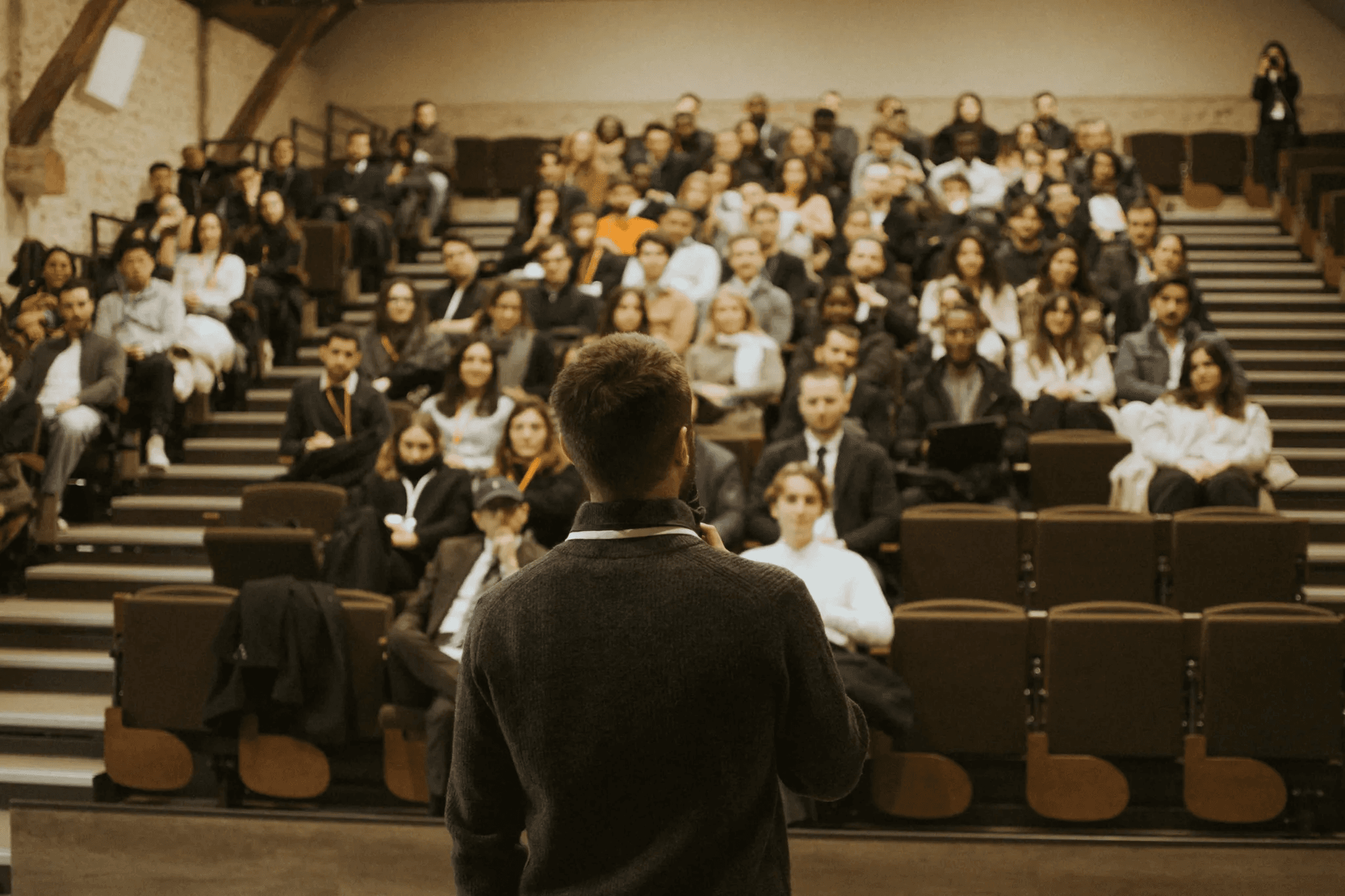
In September 2020, we were involved in the integration seminar for first-year students in NEOMA Business School’s Grande École program. This year, NEOMA BS is welcoming more than 1,100 students across its Rouen and Reims campuses. Students who come from different backgrounds, often knowing no one in their new class, and finding themselves in groups to work together.
For the school, whose long-term challenge is to prepare the managers of tomorrow, and in the short term to create a team spirit within its new cohort, it is therefore essential to quickly show the way to its newly enrolled students.
More broadly, successful integration and employee engagement are increasingly becoming part of companies’ HR challenges. Because, as the cliché goes, you never get a second chance to make a good first impression.
Relying on organizational socialization
The issue of employee integration refers to the concept of organizational socialization developed by the American authors Van Maanen and Schein (1978), that is, “the process by which an individual acquires the social knowledge and skills necessary to assume a role in an organization.”
In practical terms, this is the whole integration phase during which your new employee will absorb the expected values, norms, and behaviors in order to maintain the organization’s identity and functioning.
A theory that has evolved over time, notably thanks to Delphine Lacaze (2010). Indeed, the author goes further and now assigns an active role to the new employee, describing a dual process of transmission and acquisition between the organization and the individual.
Finally, note that organizational socialization is a long-term process that goes through several stages. It emerges from the very first meetings with the future employee during recruitment, goes through an intense phase at the time of integration (learning period), and continues throughout their journey through interactions with other members of the organization.
“Coming together is a beginning, staying together is progress, working together is success,” said Henry Ford
From now on, it should be clear to you that the onboarding period for your new recruits is a pivotal moment in their future path within your team, unit, and company. But then, how can you successfully manage this first stage of life for the employee within your company?
Taking the time to integrate
Bruce Wayne Tuckman, an American psychosociologist, worked for a long time on building cohesion within groups. In particular, he modeled a process structured around 4 (then 5) stages to optimize team functioning; this is what is known as the Tuckman method.
Forming corresponds to the period when individuals meet each other and their new organization, then create connections between group members;
Storming appears after the first exchanges. It is a more candid period in which visions and arguments confront one another in order to build a shared project;
Norming, or the release of tension toward the emergence of a group dynamic built on trust. Collaboration and mutual support are essential here;
Performing is the synergy phase. The group executes with a common goal on a highly effective and cooperative basis, with a maximum level of productivity;
Adjourning corresponds to the end of the sequence, with a celebration for the group and a feedback process to learn and capitalize on the experience of the completed project.
With a view to integrating new employees, a workshop like the one we offer, Building a team, might be of interest to you. Feel free to speak with our teams to tell us about your needs and find the best solutions for you together.
During this seminar week at NEOMA BS in September 2020, it was the first “forming” phase that played out over the following days and weeks. This phase was built through several moments of meetings and activities that enabled the foundation of these ties between students, but also with staff, teachers, alumni… the school as a whole.
Indeed, in order to best launch the next 3 to 4 years, the institution mobilized to welcome its new students and allow them to quickly understand their environment and classmates, connect with the school’s culture, and find their place in the ecosystem.
In concrete terms:
From the recruitment stage, the school communicates its vision to candidates and the co-construction of its project with them. Thus, even before they are recruited, it is already passing on to future students the values and norms that will soon become theirs.
For selected candidates, their schooling begins with an integration week. On the agenda: icebreakers and small-group work, campus tours, participation in association lectures, outdoor sports activities, and class chants. A demanding schedule carried out in good spirits, which develops a strong sense of belonging to the school and among students.
Then in the days that follow, between the start of classes and the first exchanges with professors and the academic affairs office, our new cohort ends up fully integrating the school’s way of operating.
If you have just hired new employees (or are planning to recruit talent soon), it may be wise to reflect on your welcome and integration strategy, as well as the management style to adopt depending on the situation. The SEVEN team is available to discuss this topic with you.