>
>
>
The success of management training: the alchemy of the group with Tuckman’s 5 stages
The success of management training: the alchemy of the group with Tuckman’s 5 stages
Published on
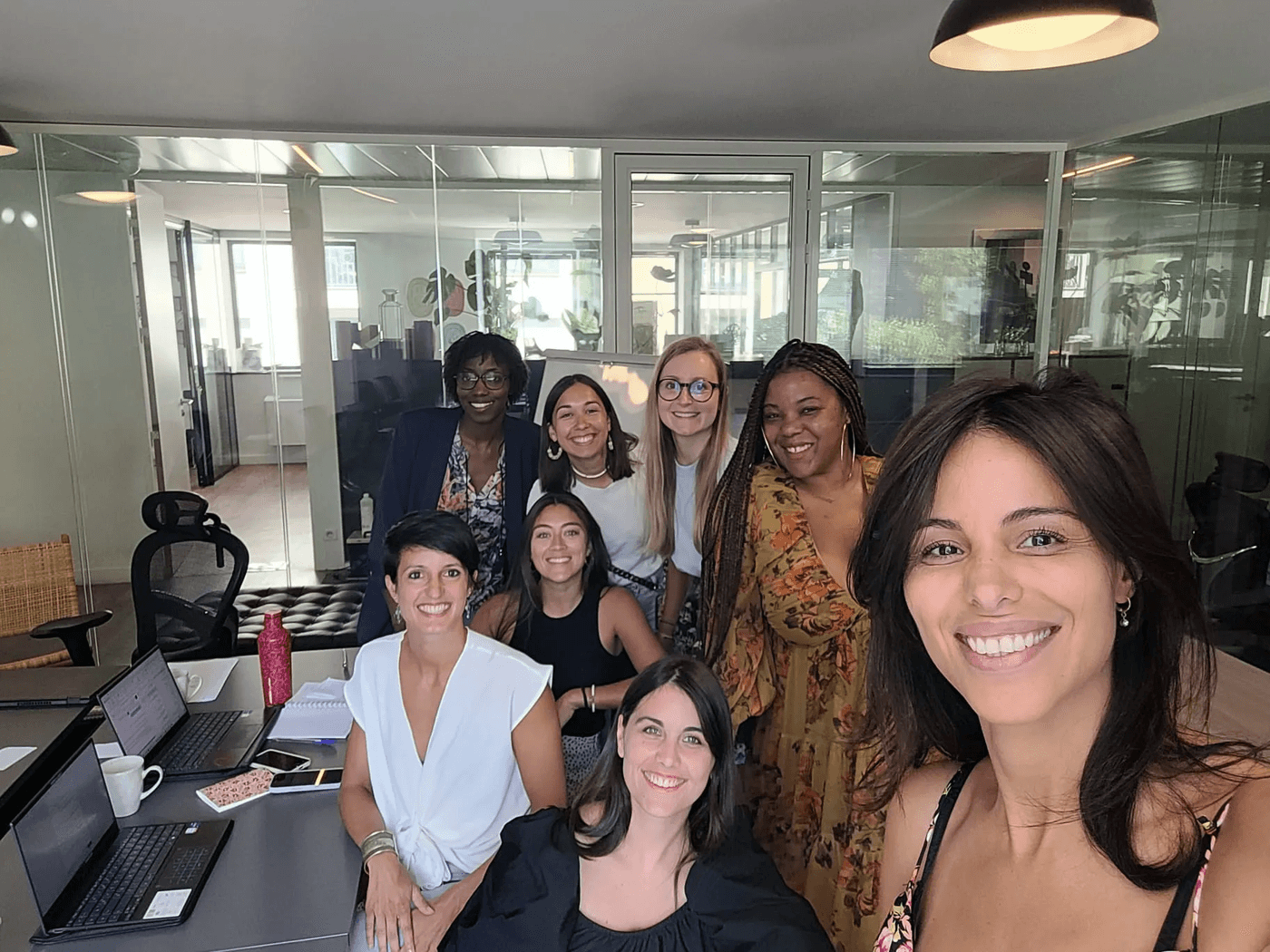
Management training is successful when the quality of the content and the trainer’s expertise are up to the task. There is a third factor, just as decisive in a collective learning process: group chemistry.
When participants feel listened to without judgment, trust the facilitator and the other group members, and feel free to share their experiences, doubts, ideas… something happens. Everyone is lifted up. And in management training, this quality of interaction is all the more valuable, because it involves discussing attitudes, vulnerabilities, and ways of acting that sometimes need to be questioned or reinvented.
At Seven, from the very design of our training programs, we do everything possible to encourage the emergence of real group dynamics. When this synergy takes hold, discussions gain depth… and the training gains impact. To illustrate the power of the collective in corporate training, we interviewed Émilie Brouard, HR Manager at RC Group, with whom we launched the Management Toolbox program in 2023, renewed in 2024 and 2025.
To understand how to build and sustain this cohesion among participants over the course of sessions, we will draw on the model of the five stages of a group’s life, described by psychologist Bruce Tuckman.
1. Forming: Creating the conditions for a good start
Thinking about group composition before the training
It was Bruce Tuckman, a psychology professor, who showed as early as 1965 that a well-functioning group most often goes through five development phases: forming, storming, norming, performing, adjourning. The first, foundational phase is the formation of the group. This stage, called "forming", is essential for laying the groundwork for a climate of trust.
This is something Émilie Brouard, HR Manager at RC Group, a communications agency specialized in high-end merchandising, understood very well. RC Group brings together 16 companies serving in-store brand communication, organized around 5 main business areas: POS - PRINT - WINDOWS - DIGITAL - EVENT.
In 2023, when launching the Seven program, Management Toolbox, Émilie paid special attention to group composition. She deliberately created two distinct teams, making sure to mix experience levels and generations... but above all, to foster relational dynamics. Result: a first group of 7 women in their thirties, recently joined the company, and a second mixed group of 8 employees with several years of seniority in the company.
“I took age and seniority into account, but above all personality compatibility, because everyone needed to feel comfortable expressing themselves. Without this thought put into the distribution, the training would not have worked.” Émilie.
Differences in participant profiles can also enrich exchanges during training, offer each person other lenses through which to view things, and fuel both collective and individual reflection. But for personality differences to become a strength, everyone must feel safe enough to speak freely. A group in which there is discomfort, where speaking is held back by fear of judgment, will not allow participants to fully benefit from the training.
The grouping can be handled internally by HR or managers... but also in collaboration with us. At Seven, we can support you in this step: by asking the right questions, helping you better understand group dynamics, and even conducting interviews or field immersions. The objective: to design groups where each participant can find their place, speak up, and learn from others.
Setting a clear framework shared by everyone
Beyond group composition, another key lever influences the quality of exchanges between participants: the common objective. Even if each person comes with their own story, expectations, and sometimes uncertainties, it is essential that everyone shares a collective direction. In the context of management training, this can mean: gaining confidence in a new role posture, taking ownership of concrete tools to lead a team, or learning to position oneself appropriately in complex situations.
For employees discovering the manager role, this posture shift can feel like a leap into the unknown. They therefore need to ask their questions, test their intuitions, and share their doubts; all within a framework that reassures them as much as it stimulates them. Forming is also the moment when expectations are clarified and the ground rules are set.
That is why, at Seven, we pay special attention to the preparation phase. Before each training session, we take the time to gather the company’s specific needs... but also those of the participants. This preparatory work makes it possible to offer tailor-made content grounded in reality, and allows the trainer to identify the group’s challenges, expectations, and experience level.
2. Storming: Framing confrontations and encouraging interactions
Welcoming disagreements
Next comes a more eventful phase: storming, or turbulence. This is when the first disagreements appear. And this is completely normal. Participants do not always share the same vision of the manager’s role: some value a very direct approach, others prefer to give more autonomy to their team members, even if that means they learn through mistakes; some believe a good manager must always have the answers, others feel they should above all ask the right questions. These differences in perception can quickly create friction. A good facilitator does not try to hide disagreements, but rather welcomes them in order to value everything they bring.
Establishing a caring framework despite differences
Disagreements are inevitable in training, and fortunately so: they are the sign of a living, participative, and committed group.
So that these differences feed discussion, the facilitator must establish a reassuring framework from the start. This means clear guidelines, stated with conviction: “Before we get to the heart of the matter, I suggest we set a few ground rules for kindness together. Here, we take time to listen to one another, we do not interrupt, we do not judge, and everything said remains within this group. Is everyone aligned?”
The trainer can also encourage discussion formats that allow everyone to speak: speaking rounds, rephrasing, role plays... mechanisms that create rhythm and breathing space, prevent some people from monopolizing the floor, and allow quieter participants to find their place.
Émilie, who took part in the Management Toolbox training, recalls: “The facilitator was attentive. She created a climate of trust, a real space for exchange. The discussions were so sincere that each of us shed a tear at one point. It was truly valuable to be able to speak with so much trust.”
In short, the storming phase is delicate but essential. If navigated under the right conditions, it strengthens trust within the group.
3. Norming: Establishing a good balance within the group
Observing dynamics
When the formation (forming) and turbulence (storming) phases have been fully experienced, the group can then begin to find its rhythm. Exchanges become more fluid and tensions ease. This is the beginning of the normalization phase, or norming.
This relative calm should not lower the trainer’s vigilance. This is when they can refine their positioning. To observe is to pay attention to what is happening between the lines: a participant who often speaks up, without necessarily realizing it; another who stays quiet, not out of disinterest, but from fear of not measuring up; evasive glances, nervous laughter, heavy silences...
A good trainer will ensure exchanges flow without stifling momentum, make room for more reserved participants without cutting off those who express themselves. And above all, ask questions that help everyone become aware of their own ways of functioning, without judgment or labels.
Encouraging co-construction
Norming is the moment when participants begin to learn as much from one another as from the trainer. Training on the theme of management offers a space for exchange, cross-perspectives, and mutual support.
The trainer can encourage this co-construction by inviting participants to: share their best practices, provide advice based on lived experience, and jointly analyze a real situation brought by a group member.
This active approach not only boosts memory and engagement, but also values diversity of profiles. A beginner manager can absolutely inspire a more experienced colleague. Likewise, a manager who has been in position for ten years might decide to adopt a new posture by listening to a peer.
4. Performing: Using the group to help each individual grow
Solving concrete situations as a group
When the group has found its balance, it can reach a high level of collective performance, says Bruce Tuckman: this is performing. Exchanges become deeper and more useful.
In the Management Toolbox training, for example, the Delegation Poker model was a real trigger for participants. Created by Jurgen Appelo in the context of agile management, this visual tool helps clarify the different possible levels of delegation, from “I decide alone” to “I let you decide completely.” Thanks to this set of 7 cards, each participant was able to step back and reflect on their own way of delegating: Do I assign a task too quickly without support? Do I keep control for too long? Am I clear about what I expect?
Another highlight of this Seven training: the use of Moving Motivators, a tool also drawn from Management 3.0. It makes it possible to rank the 10 main intrinsic motivation drivers (such as curiosity, recognition, or freedom) according to personal importance. This exercise opens discussions on what truly motivates a team. By applying this method with their direct reports, some managers had their intuitions confirmed, while others discovered they were projecting their own motivations onto their employees...
These tools therefore spark breakthroughs. Sometimes they even make it possible to move from theory to concrete insights that can be directly applied in the field.
Encouraging peer-to-peer exchanges
The group stimulates, challenges, and encourages one another. And for many, that is what makes all the difference. “We realized we all had the same doubts. We stimulated one another. We progressed together.” Émilie, HR Manager and former Seven participant.
In management training, this peer solidarity is even more valuable. It allows participants to break their isolation, often felt at the beginning of a manager role, to realize they are not alone in asking the same questions, and that they can rely on one another.
When one person shares a difficulty, a mistake, or a doubt, the group does not judge: it supports, sheds light, and enriches. It is in these sincere exchanges that each person defines specific actions to take, works on and refines their posture, according to their personality and context.
5. Adjourning: Anchoring learning after the training ends
Organizing a collective closing moment
Final step of Tuckman’s model: the dissolution of the group, or adjourning.
Closing a training session means enabling each person to become aware of the progress made... and to look ahead to what comes next. It is the moment to anchor what has been experienced, shared, and understood, before returning to daily routines.
During the final session, it is wise to plan a collective debrief moment. This can take the form of a roundtable, a word cloud, or a more symbolic ritual. Simple questions are enough to start the discussion: What will you take away? What do you want to test as early as tomorrow?
This key moment helps value insights gained, acknowledge everyone’s contributions, and put words to what was experienced together. In addition, it leaves a positive emotional trace and strengthens the bond between participants, beyond the content delivered.
“This Seven training was a real trigger for many people. It made it possible to step back, ask the right questions, and sometimes dare actions that would not otherwise have been taken.” Émilie, HR Manager at RC Group
Offering follow-up or relay mechanisms
The real challenge for managers often begins afterward, when they return to their daily routine, but alone. To maintain their enthusiasm and willingness to act, it is essential to offer them follow-up supports, even simple ones. A few ideas: a WhatsApp or Teams group between participants to continue helping each other - peer pairs to regularly discuss their managerial situations - a co-development session organized 2 months later - a “feedback” meeting with the trainer or HR.
The experience shared by Émilie Brouard, HR Manager at RC Group, reminds us that the success of a training program does not rely solely on its content, nor only on the quality of the trainer. It also depends on what happens between participants: the respect among them, the trust that is built, the ideas that circulate, the experiences that resonate from one person’s lived experience to another. When group dynamics are fluid and supportive, everyone more easily dares to question themselves, express themselves, and experiment. Exchanges become a lever for individual progress. We no longer move forward alone, but carried by the group’s collective intelligence.
Bruce Tuckman’s model of the five stages of a group’s life shows how essential it is to adapt group support to its progress and level of maturity. When collective dynamics are well guided, they multiply the impact of training: participants more easily take ownership of the tools, step back to reflect on their management style, and leave with concrete keys to act differently in their daily work.
At Seven, we are convinced that successful training is above all a human experience, in which everyone learns from others as much as from themselves. It is by creating the conditions for this alchemy, from the design stage onward, that the magic happens.