>
>
>
A memorable training course: 6 years later, management tools used every day
A memorable training course: 6 years later, management tools used every day
Published on
Some training courses inspire us. Others go further: they transform our practices, influence our decisions, and become part of our daily professional lives… sometimes even years later. That’s what Élodie Dereuder tells us, now HR Manager at Percassi, an Italian group that notably includes the Victoria’s Secret and LEGO brands.
In 2019, Élodie took part in a management training session led by Seven. Six years later, she still remembers it clearly. Beyond simply remembering it, she still applies today the tools shared during that day of training. They support her in her day-to-day work.
In 2025, when she decides to train the managers of the different teams she works with, she naturally turns once again to Seven.
Why did her first Seven training remain in her memory? What does she take away from the experience? What makes a training session continue to produce lasting effects six years later? A look back at that day in 2019, and at what it continues to nurture.
Elevating the customer experience in all Ralph Lauren stores in France
A Seven program designed to meet the needs of field managers
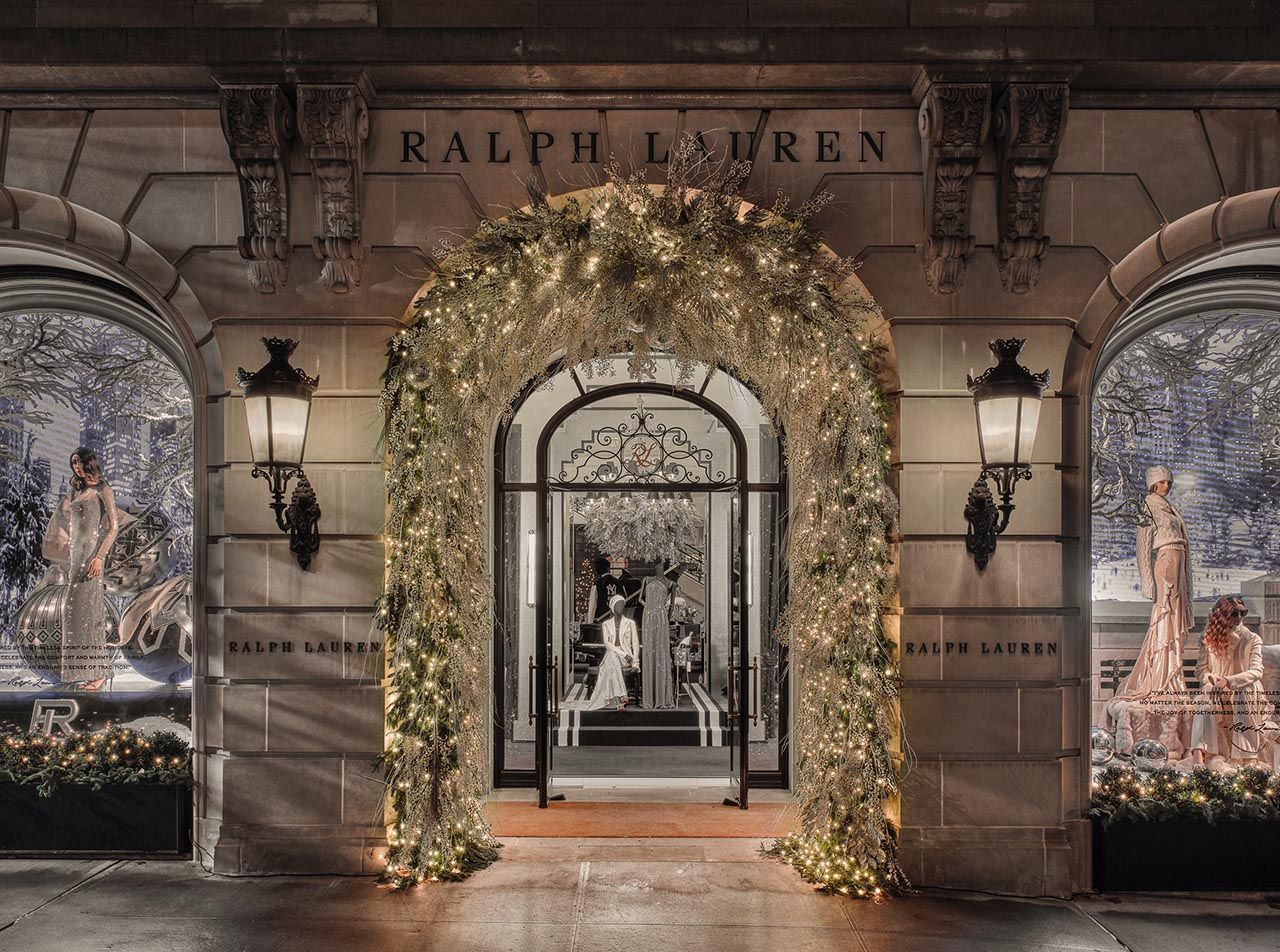
In 2019, the Ralph Lauren brand, a leader in the design, marketing, and distribution of high-end products, began a new momentum in France: strengthening and elevating the customer experience across the entire country, in every point of sale. “In 2019, we were continuing our strategy based on premium customer service,” explained Élodie Dereuder, who was a member of Ralph Lauren’s HR team that year. “The challenge was to enhance the customer experience in all Ralph Lauren stores in France.”
To achieve this, around fifteen field managers gathered in Paris in 2019 for a one-day training course: the Management Toolbox, designed and led by Seven. They held a variety of roles: store managers, department managers, assistant managers, and stock managers. Their common ground: being on the front line of operational management and customer service. Our mission at Seven: provide them with practical advice directly connected to their real-life challenges.
Training built to engage operational profiles
This training session, led by Seven, was based on a key theme: managerial adaptability. How can a manager be helped to adjust their posture and communication depending on people and situations? These are essential skills to develop in fast-paced sales environments, where teams are made up of very diverse profiles (experienced or beginner salespeople, seasonal staff, department managers, etc.). This was especially true at Ralph Lauren, where managers had to juggle performance requirements, premium brand standards, diversity of points of sale… and heterogeneous teams. In this context, knowing how to adapt one’s management style to each employee was essential to engage, motivate, and help everyone progress.
For the HR team, the challenge was to build training that was useful, accessible, and engaging for professionals used to being in the field, often far from training rooms. “It’s not easy to capture managers who are always in action, in contact with customers and teams. But the pace of Seven’s training was right: dynamic, lively, concrete.” Seven’s training was designed to fit their rhythm and constraints: the alternation between role plays, theoretical input, and peer exchanges helped maintain the group’s attention while encouraging active participation. “Managers from different environments were able to come together, exchange, and realize they were facing the same challenges, with a shared objective: customer experience,” added Élodie.
Practical tools covered in Seven training and usable over time
During Seven’s Management Toolbox training, delivered in 2019, four tools were shared. Today, Élodie still uses them and passes them on around her.
Situational Management
Adapting your management style to each employee
The concept of situational management was developed in the 1960s by Paul Hersey, a management professor, and Ken Blanchard, a leadership consultant. They started from the principle that there is no single universally good management style. According to them, managerial effectiveness depends on the ability to adapt to people and situations.
The situational management model they defined aims to identify the right management style according to an employee’s level of competence and motivation on a given task.
Concretely, P. Hersey and K. Blanchard distinguished four management styles, to be chosen according to two criteria: the employee’s level of mastery of a task and their degree of commitment. A way to help managers adjust their posture: should they be directive, participative, delegative, or coaching?
What Élodie says about it: “I learned that the management style to adopt depends on an employee’s ability to perform a task well and their motivation to do it. Today, I take the time to observe these elements before supporting a colleague.”
Bono’s “lenses”
Better understanding your counterparts to adjust your communication
Our “lenses” workshop is an adaptation of Edward de Bono’s six thinking hats theory, also known as lateral thinking . In the 1980s, this Maltese doctor and psychologist explained that there are six main ways of seeing the world, and that each person—depending on their personality, encountered situations, and context—will rely on one perspective more than another.
Understanding these different ways of perceiving helps you step back from your own way of communicating, and also better understand your counterparts’ reasoning patterns and adapt your communication according to their perception filters.
Each “lens” represents a way of approaching a situation: an emotional, factual, optimistic, cautious, creative, or organizational perspective. By identifying the one your counterpart favors at a given moment (because our perspective evolves depending on context), you can adjust your language, arguments, and relational posture. Exchanges then gain in clarity, fluidity, and effectiveness.
For her part, Élodie shared a very practical use of the tool: “Now that I know the lenses, I make sure to adopt a different approach depending on whether I’m speaking with a very creative colleague or someone very factual.”
Delegation Poker
Clarifying the desired level of autonomy to improve efficiency
Delegation Poker comes from the Management 3.0 method, developed by Jurgen Appelo, author and expert in organizational agility. In his work, he proposes tools to encourage more participative management, especially in complex or transforming environments.
The Delegation Poker tool offers seven levels of delegation, from the most directive (level 1) to the most autonomous (level 7). Manager and employee discuss together the level suited to the task or project concerned. This shared framework avoids unspoken assumptions or misunderstandings, helps find a balance between trust and oversight, and supports skill development.
For Élodie, this approach changed the way she delegates: “This tool helped me understand that it’s not a choice between complete delegation on one side and no delegation on the other. There are several levels of delegation—the approach is not binary. Before, I delegated completely or not at all. Now, thanks to Delegation Poker, I adjust my level of delegation according to the situation and needs.”
The DESC method
Structuring constructive feedback to strengthen the relationship
The DESC method was designed in the 1970s by Sharon A. Bower, an American psychologist specializing in assertive communication. It is part of work on nonviolent communication and interpersonal conflict resolution. Using it helps structure feedback in a constructive, clear, and respectful way, whatever the situation (examples: encouragement, corrective feedback, post-project feedback after success, de-escalating tension).
DESC is a four-step acronym to: Describe facts objectively - Express your feelings without accusation - Suggest a solution or alternative - Conclude on a note of openness or agreement. It proves to be a valuable tool for daring to say things while preserving the relationship and encouraging accountability.
Élodie came back to her use of DESC: “I use the DESC method, learned with Seven, every day. When I need to share feedback, I always start with concrete facts, which allows me to open dialogue without putting people on the defensive.”
Training that helps you grow… and spreads
When tools seen in training become reflexes
Six years after her first Seven training, the four approaches discovered in 2019 have become professional reflexes for Élodie. “These tools are now part of my daily life, whether to support the employees I work with as HR, or to manage members of my team.”
Because she cares about her employees’ development, she does not hesitate to share these tools around her. “It’s training that truly changed my approach and my way of working.” That is how she passes on the best practices she learned to close colleagues, as well as newcomers and field teams.
When training leaves a lasting mark
That day in 2019 changed Élodie’s HR posture. She speaks of it as a founding moment. “Seven’s training changed the way I see and approach management.”
Six years later, what remains for her goes beyond the content: it is a way of listening differently, of supporting with accuracy. It is also precise memories, still vivid, of meaningful exchanges and tools integrated for good.
“Honestly, the training delivered by Seven is one of those that marked me the most in my career.” A sentence that, inevitably, touches us deeply.
From participant to advocate: 6 years later, she calls on Seven
HR Manager at Percassi in 2025, Élodie is leading a new managerial training project, this time for teams from the Victoria’s Secret and LEGO brands.
When she needed to determine the ideal partner to design and lead this training, Seven’s name naturally stood out. “In 2025, I wanted to offer Store Managers in Victoria’s Secret and LEGO stores high-quality training that would help them consolidate management fundamentals. Right away, I thought of Seven.”
What guided her choice: the quality of Seven’s facilitation, the real impact of the content on practices, and the ability to provide memorable training, even in a short format.
If you’re wondering what training looks like when you still remember it years later, with tools that naturally find their place in your daily life, the simplest thing may be… to experience it yourself. At Seven, we design useful, practical, and engaging training programs, created to be memorable and impactful.
Élodie Dereuder, a former Seven participant, still remembers that management training day she experienced in 2019. Since then, she has continued to apply its lessons.
If in 2025 she chose to launch the Seven management training for her Percassi teams, it is because the tools shared 6 years ago have been tremendously useful throughout her journey.
At Seven, this is exactly what we aim to create: training programs that do not stop at the classroom, or at the end of the day. But memorable learning experiences that leave a mark, take root, and reappear at the right moment, in a meeting, a conversation, a managerial challenge. Because deep down, good training is not just the kind we remember, it is the kind we continue to use in our reflexes without even thinking about it.